If you are reading this article, I hope you have already read the first one on how to start contributing to Open Source. That post was more focused on contributions where you code or write something and send it for review. Today, however, I want to talk about something different: contributions that don’t directly involve writing code.
TL;DR
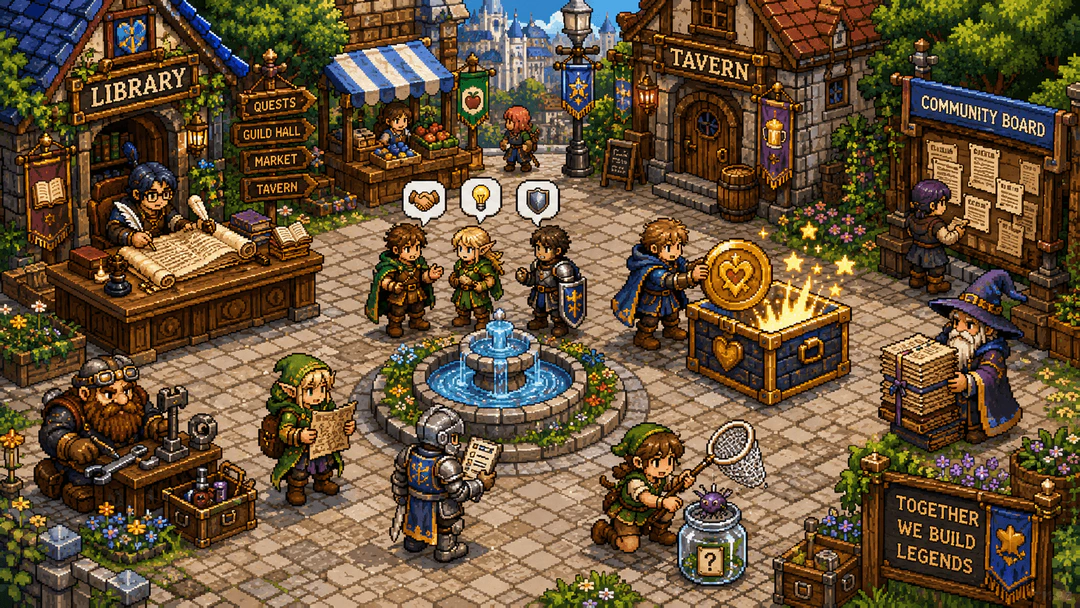
You don’t need to open a PR to make a contribution. You can be a user who reports bugs, opens issues, and participates in discussions. You can write articles about projects, create tutorials, and even give talks or promote tools on your social media. You can also sponsor a repository or make one-time donations. All of this counts as a contribution and helps the community grow.
How to Contribute
There are countless ways to contribute as a user of an Open-Source project. Here are a few of them:
Issues
Please, open issues!
How many times have you stumbled upon a terrible bug and didn’t report it? How many times have you built something from scratch that could be much simpler if it were native and available to everyone?
Do you know why this happens? Because we often don’t set aside time to report or request something. However, doing so is very simple and helps the community immensely. Opening an issue is a real form of contribution, even if you don’t know how to solve the problem through code. This is how Open-Source projects continue to evolve, as this feedback is essential for maintainers to understand the direction the project should take.
Opening an issue is indeed a contribution: it shows up on your GitHub profile, and the project’s organization will also be displayed in your profile overview. If you don’t know how to open an issue, check out this GitHub guide that explains it step by step.
Discussions
Sometimes, certain issues aren’t very clear and may require further debate. You can participate in these discussions by indicating what you expect as a user or sharing your thoughts on the best way to solve a problem (what we call “triage”). This makes the maintainers’ job much easier.
Furthermore, GitHub itself offers a Discussions tab where you can join conversations about the project, ask questions, and suggest new features. Many communities also have mailing lists, forums, and active chats via Discord or Slack where this exchange of ideas takes place actively.
Writing Articles and Tutorials
“Why write about something that already has documentation?”, you might ask. The point is that your content will be a new touchpoint for people. It will have your own style and approach, which can make it more appealing and understandable for a specific audience.
You can post on your social networks, blogs, and content platforms like Medium, Dev.to, Substack, etc. This reaches people who normally wouldn’t consult the tool’s official website. In the age of AI, it’s worth noting that the more high-quality content exists on the web, the more LLMs will learn and generate better answers for users in the future.
Giving Talks
Speaking is an excellent way to support and give visibility to an initiative. It allows more people to learn about the tool, besides being a great way to promote yourself and establish authority on the subject.
You can speak at meetups, conferences, webinars, and even internal company events. If you don’t feel comfortable giving a long talk right away, start with something simpler, like a lightning talk or a quick 5-minute presentation.
Promoting the Project
This might sound similar to the last two topics, but you don’t need to dive deep to promote someone’s work. You can simply share changelogs or interesting news with every release (or as you discover them while using the tool).
This could be a quick post on your social media or a message in a WhatsApp or Telegram developer group. It might seem like a small thing, but word-of-mouth helps the community grow organically and reach a lot more people.
Sponsorship and Donations
You may have never noticed, but GitHub itself has a Sponsors tab where you can financially support a project or an individual maintainer. Some repositories also provide links for donations via PayPal, Patreon, Stripe, etc.
Others fall under the umbrella of non-profit organizations, like Open Collective and NumFOCUS, which manage donations for Open-Source projects. If you or your company have the means to sponsor, do it! This immensely helps maintainers keep the project alive and secure. After all, a large portion of the Open-Source software that powers the internet is maintained by people working in their free time, receiving nothing in return.
Conclusion
Although writing code is the most remembered form of contribution, it is definitely not the only one. You don’t need to stop participating in a community just because you don’t have time to open Pull Requests. Simply take any of the actions above and impact the project in a different way.
What really matters is that you are helping the community grow and evolve.
And you? Which project have you contributed to without opening a PR, and how was that experience? Let me know in the comments, I’d love to know!