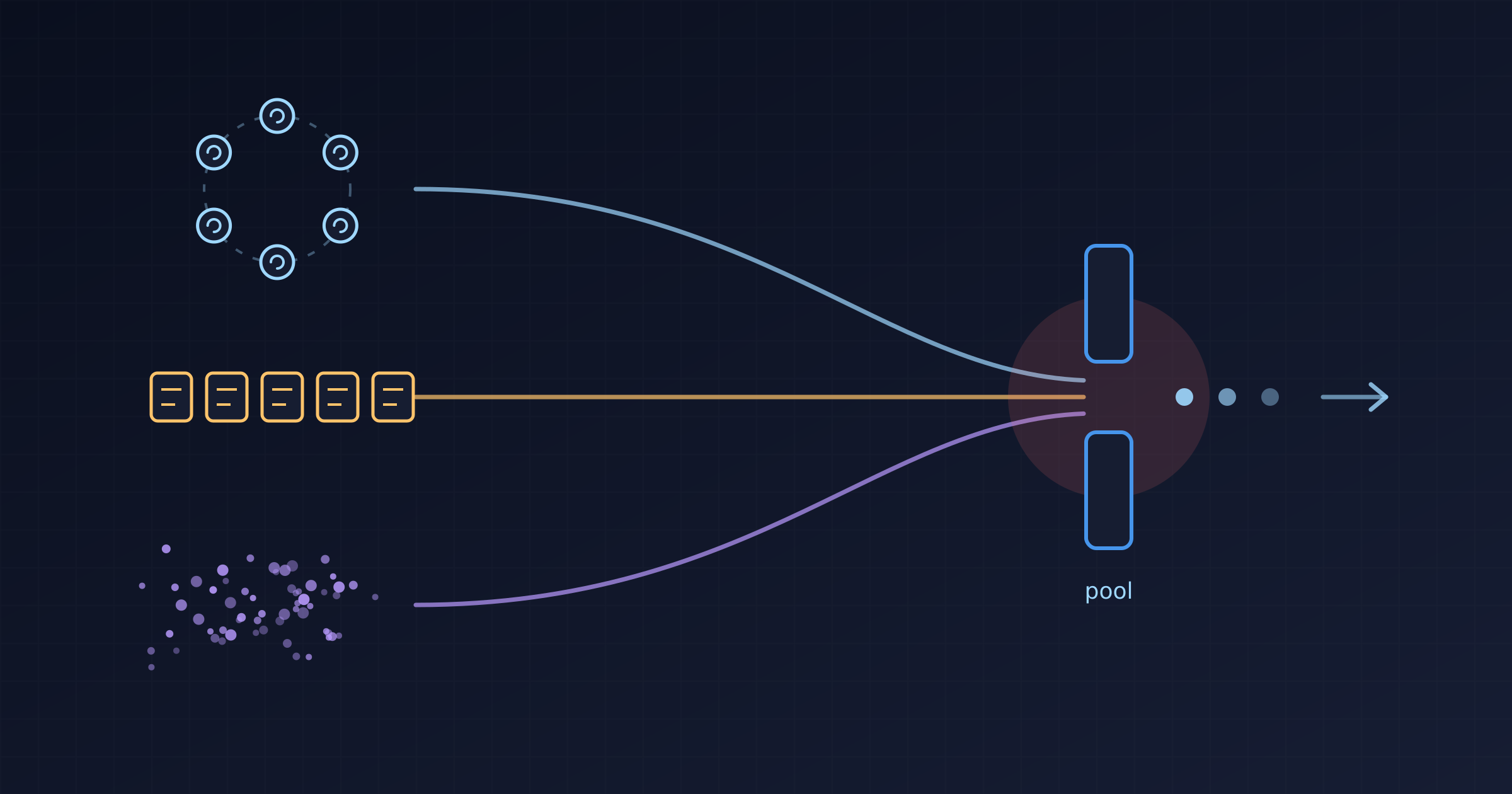
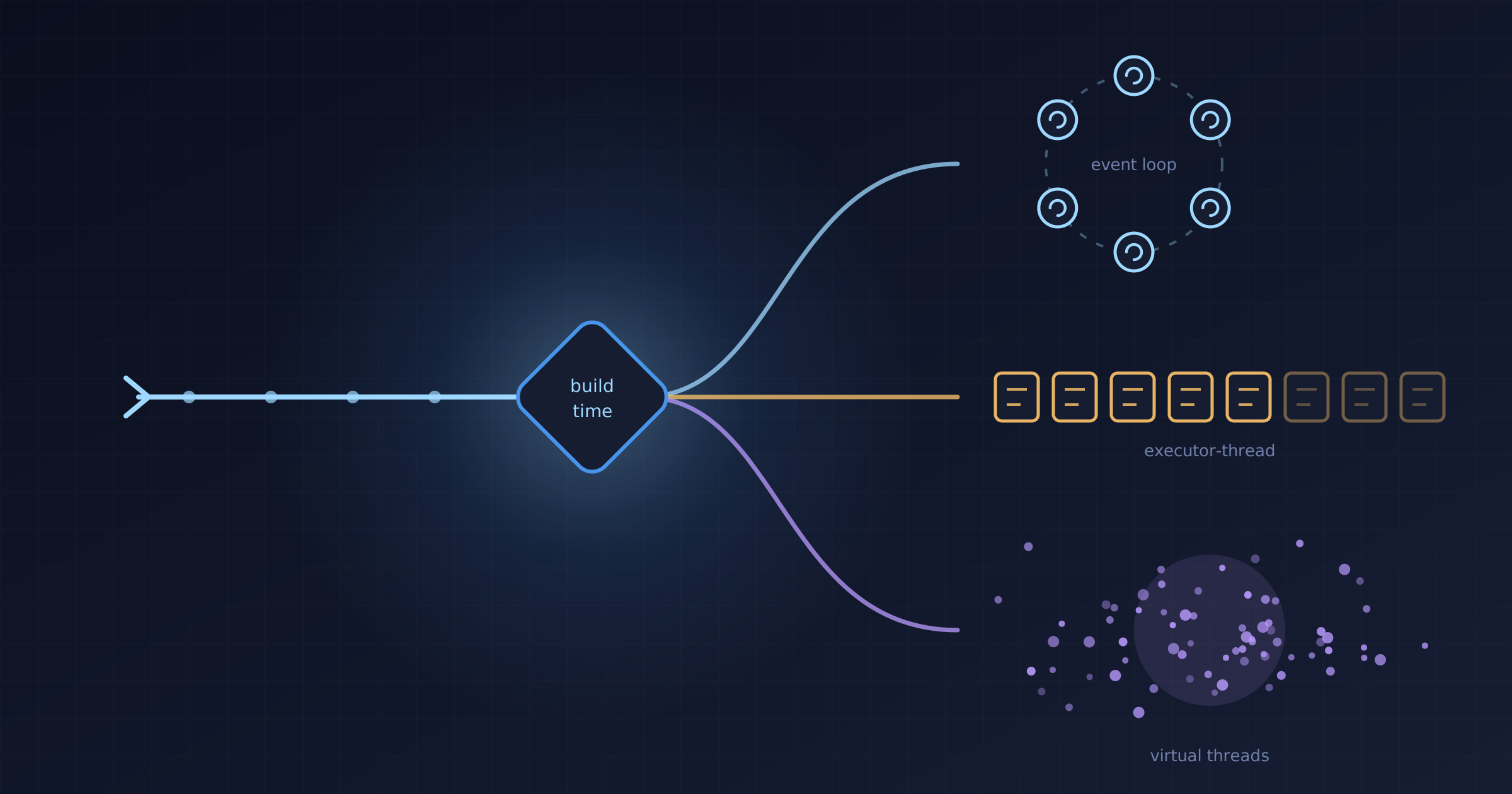
Illustration of three lanes, an event loop ring, a row of workers and a cloud of virtual threads, all narrowing into the same small gate labelled pool

Inside the Quarkus reactive core, part 4: reactive or virtual threads in Quarkus 4

Benchmark the three models the quick way and virtual threads look twice as fast as workers, reactive four times. That table measures the load generator. Part four of the series: how Quarkus 4 runs virtual threads, which pool limits each model, and an open-model benchmark where the worker pool turns out to be a bulkhead.
November 8, 2026 路 23 min 路 Matheus Oliveira
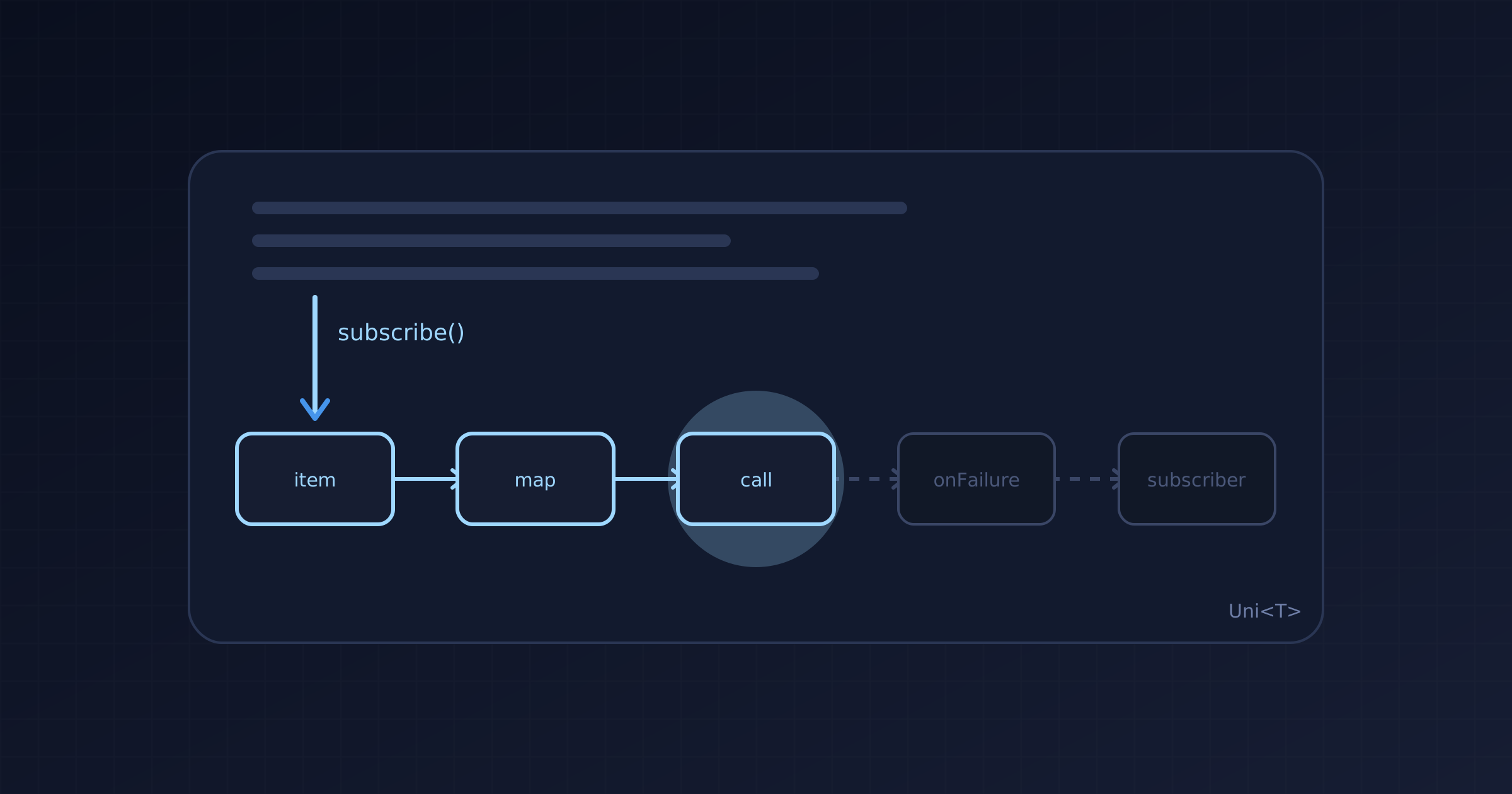
Illustration of a recipe card made of connected pipeline stages, idle and grey, with a single subscription arrow lighting the stages up one by one

Inside the Quarkus reactive core, part 3: a Uni is a recipe, not a result

An order that compiles, runs, returns the right confirmation and never writes its audit log. Part three of the series: what a Uni actually is, who subscribes to it in Quarkus, and why Mutiny schedules nothing on its own.

November 1, 2026 路 13 min 路 Matheus Oliveira
Illustration of a request entering a switch that routes it to one of three tracks: a ring of event loops, a row of worker threads and a cloud of virtual threads

Inside the Quarkus reactive core, part 2: who runs your code

The Quarkus REST guide says @Transactional sends an endpoint to a worker thread. I wrote the test and got a 500. Part two of the series: how Quarkus decides which thread runs your method, and why a ThreadLocal set in a filter seems to work.

October 25, 2026 路 13 min 路 Matheus Oliveira
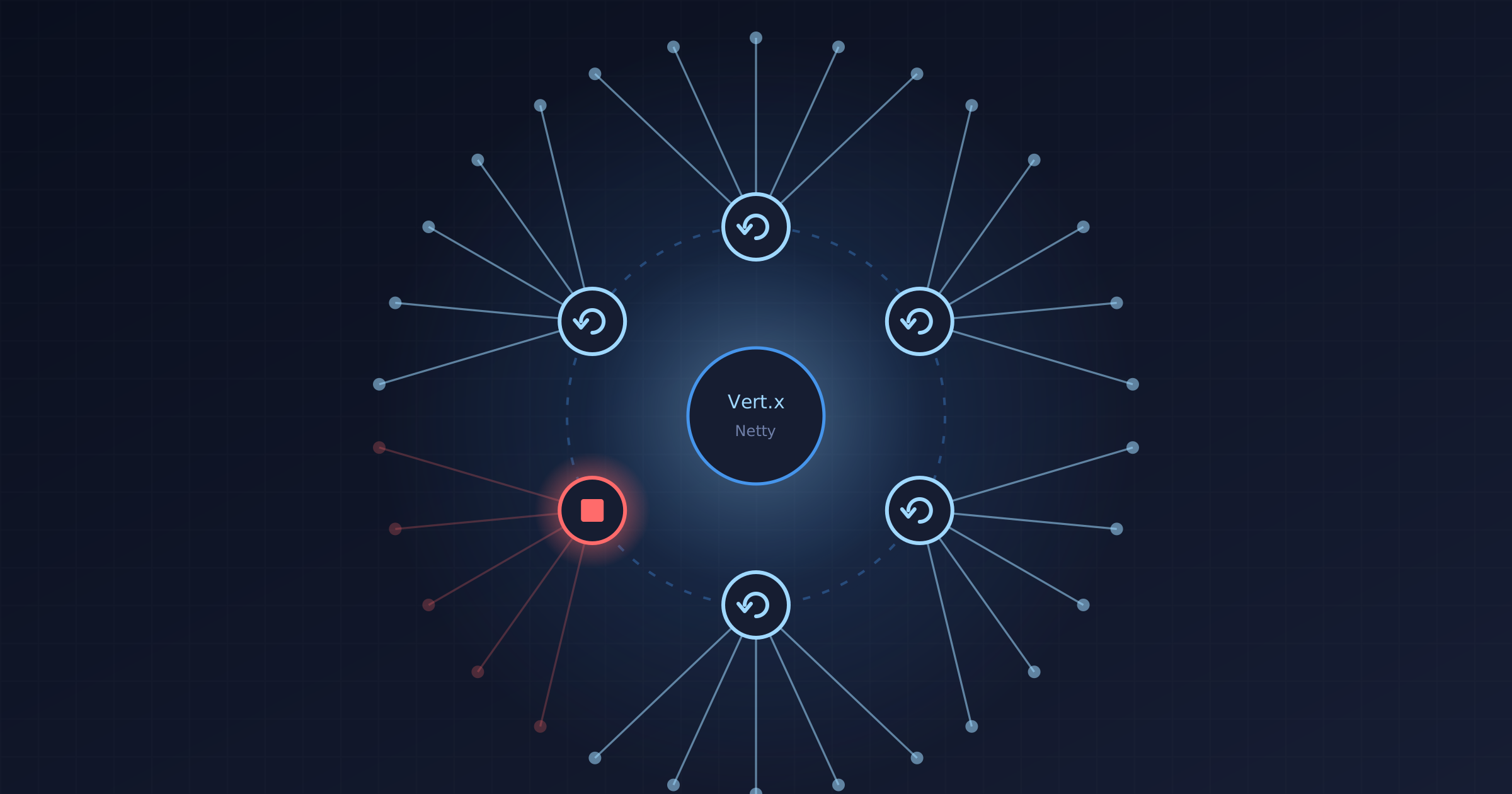
Illustration of a ring of event loop threads, each serving many connections, with one blocked thread highlighted in red

Inside the Quarkus reactive core, part 1: the event loop from the ground up

I gave Quarkus two event loops and fired 24 requests at it at once. Every one was served by one of those two threads. Part one of a series on how Quarkus runs your code, starting below Quarkus: Netty, Vert.x and the rule you cannot break.

October 18, 2026 路 13 min 路 Matheus Oliveira
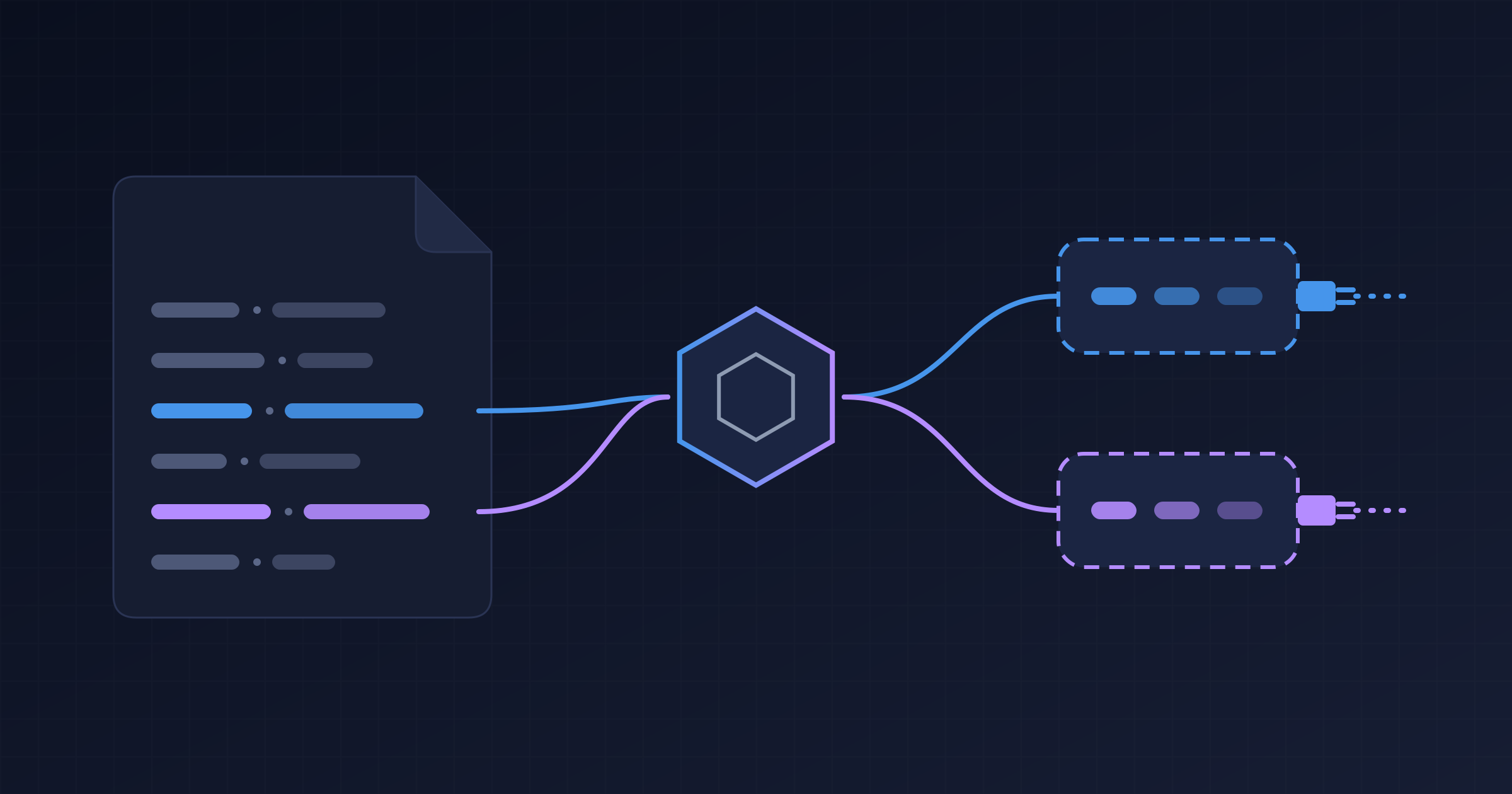
Illustration of a configuration file whose highlighted lines flow into a hexagon and come out as two dashed-outline blocks with plugs

Inside ArC, part 3: the beans nobody wrote

I found beans in my application鈥檚 bytecode that no class in the project declares. In part 3 of this ArC deep dive, I show how extensions create beans from configuration, why Quarkus doesn鈥檛 run Portable Extensions and how a Quarkus extension works inside.

October 11, 2026 路 8 min 路 Matheus Oliveira
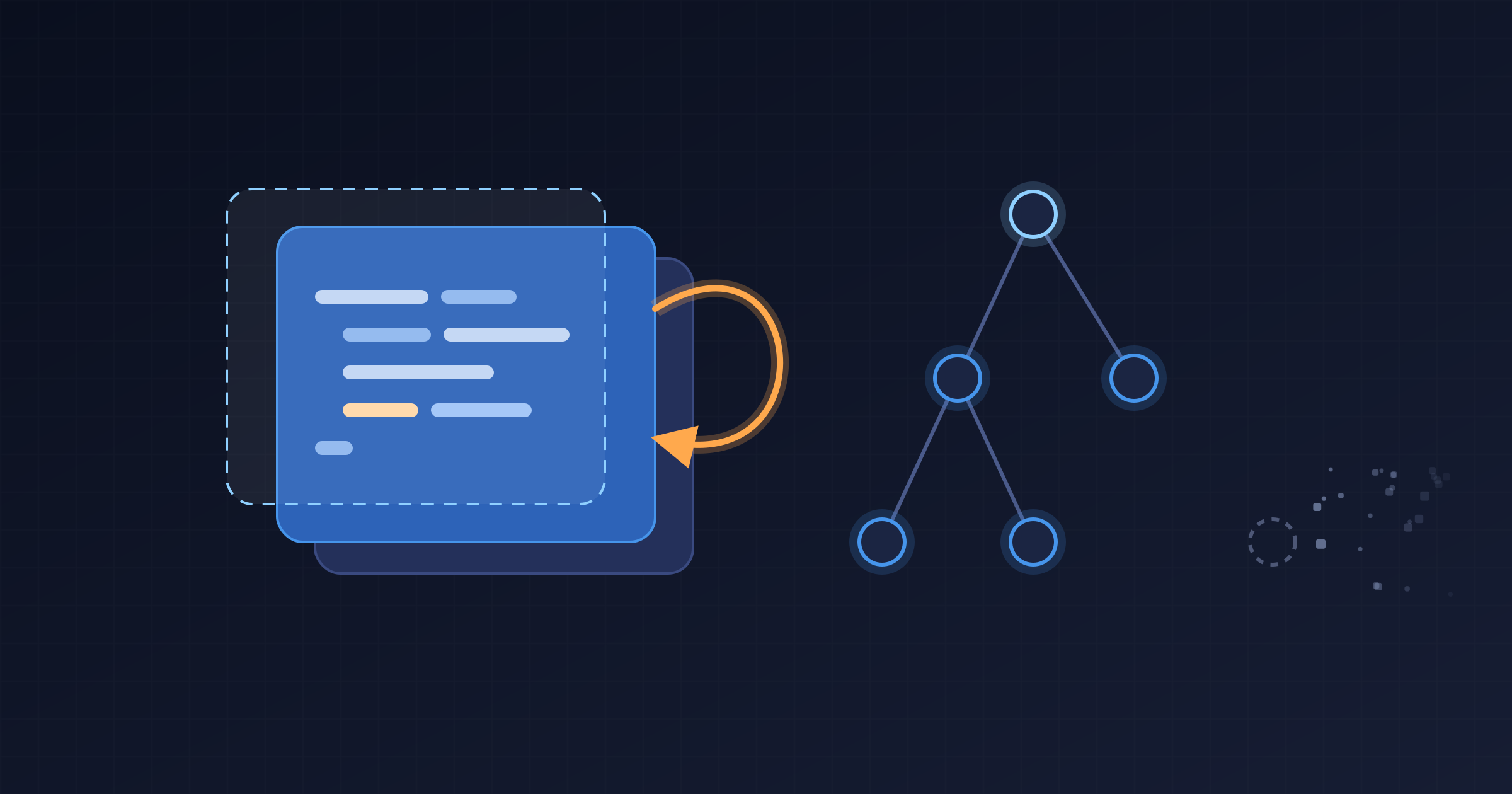
Illustration of a code block with a translucent dashed frame in front and a layer behind it, an orange arrow looping back into the block and a dependency tree with one node dissolving into particles

Inside ArC, part 2: proxies, interceptors and the bean that vanished

A constructor that runs twice, an interceptor that works even on internal calls and a bean that doesn鈥檛 even exist at runtime. In part 2 of this ArC deep dive, I show what the Quarkus build changes in application code.

October 4, 2026 路 9 min 路 Matheus Oliveira
Illustration of an editor window with lines of code connected by an electric arc to a grid of blocks representing the generated bytecode

Inside ArC, part 1: the Quarkus CDI that runs before your code does

I opened the bytecode Quarkus generates for CDI to see what the container does before the application starts. Part one of a deep dive into ArC with real experiments: discovery, validation and a create() that is just a new.

September 27, 2026 路 11 min 路 Matheus Oliveira